Wednesday, January 8, 2014

idealist


“He who works with his hands is a laborer. He who works with his hands and his head is a craftsman. He who works with his hands and his head and his heart is an artist.”
-Saint Francis of Assisi


I esteem highly those words (as I do the man who wrote them) and affix my future to its maxim... so while I am waiting on the envelope revealing the location of that future, I will just employ these hands in the kitchen.

Salted Chocolate Rye Cookies
From Tartine Book No. 3


2⅔ cups (1 pound) chopped bittersweet chocolate (70%)
4 tablespoons unsalted butter
¾ cup whole-grain dark rye flour
1 teaspoon baking powder
½ teaspoon fine salt
4 large eggs, at room temperature
1½ cups muscovado sugar
1 tablespoon vanilla extract
Good quality sea salt, such as Maldon or flaky fleur de sel, for topping
1. Place a saucepan filled with 1 inch of water over medium heat and bring to a simmer. Set a heatproof bowl over the simmering water, taking care that the bottom of the bowl is not touching the water, and melt the chocolate and butter together, stirring occasionally. Once melted remove from the heat and let cool slightly.
2. In a small bowl, whisk together the rye flour, baking powder, and salt and set aside.
3. Place the eggs in the bowl of a stand mixer fitted with a whisk attachment. Whip on medium-high speed, adding the sugar a little bit at a time, until all the sugar is incorporated. Turn the mixer to high and whip until the eggs have nearly tripled in volume, about 6 minutes.
4. Reduce the mixer speed to low and add the melted chocolate-butter mixture and the vanilla. Mix to combine, scraping down the sides of the bowl as needed, then add in the flour mixture just until combined. At this point the dough will be very soft and loose, which is normal; it will firm up as it chills.
5. Refrigerate dough until it just firm to the touch, about 30 minutes. (The longer you chill the dough the harder it is to scoop.)
6. Preheat the oven to 350 degrees. Line two baking sheets with parchment paper. Remove the dough from the fridge and scoop with a rounded tablespoon onto the baking sheets, shaping the balls of dough into rounds and spacing them 2 inches apart. Top each mound of dough with a few flakes of sea salt, pressing gently so it adheres.
7. Bake for 8 to 10 minutes, until the cookies have completely puffed up and have a smooth bottom and rounded top. Remove the baking sheets from the oven and let cool slightly (the cookies may flatten a bit), then transfer to a wire rack and let cool completely. The cookies with keep up to 3 days in an airtight container.

Monday, January 6, 2014

NYE, a little late


Lets back up a few days…

I am running from the kitchen to the closet for a quick stir of the risotto then to dig through my clothes for anything sequined; I dash back in to flash fry eggplant then step into my red suede heels. My fingers are stained with berries and I have meringue in my hair, but I have a good 10 minutes before I am supposed to be anywhere with 3 dishes in hand. I always enjoy the hustle and our plans to both dine with close friends and stop by a party at husBen’s boss’s house in between our appetizer and main provide me adequate track for the few hours left of 2013.

It’s New Years Eve, after all.

Looking back, that night was an absolute blur. No wonder I lost touch with temperance and all adherence to moderation. Honestly, wherein our busy lives are we supposed to practice such virtue, when the clock requires of us a constant mad dash (true concern of a self-acclaimed workaholic)?

Moral virtue is formed by habit (according to Aristotle* anyway) therefore in order to possess self-control, I must repeatedly exercise self-control; through this action, I become a person of stronger will. Simple enough, eh? Note the importance of the mean/moderation here: 

“First of all, it must be observed that the nature of moral qualities is such that they are destroyed by defect and by excess. We see the same thing happen in the case of strength and of health, to illustrate, as we must, the invisible by means of visible examples: excess as well as deficiency of physical exercise destroys our strength, and similarly, too much and too little food and drink destroys our health; the proportionate amount, however produces, increases and preserves it. The same applies to self-control, courage, and the other virtues: the man who shuns and fears everything and never stands his ground becomes a coward, whereas a man who knows no fear at all and goes to meet every danger becomes reckless. Similarly, a man who revels in every pleasure and abstains from none becomes self-indulgent, while he who avoids every pleasure like a boor becomes what might be called insensitive. Thus we see that self-control and courage are destroyed by excess and by deficiency and are preserved by the mean.”

These words harbor great truth for me in 2014. I approach a year more dichotomous than any yet: almost complete freedom (in these last months of medical school) then my first real job (residency starting in July). I suppose I can begin practicing that virtue-building moderation in anticipation of the struggles to come next time I am in front of a bowl of risotto or a flute of champagne…

*excerpt from Aristotle’s Nicomachean Ethics


NEW YEAR’S EVE
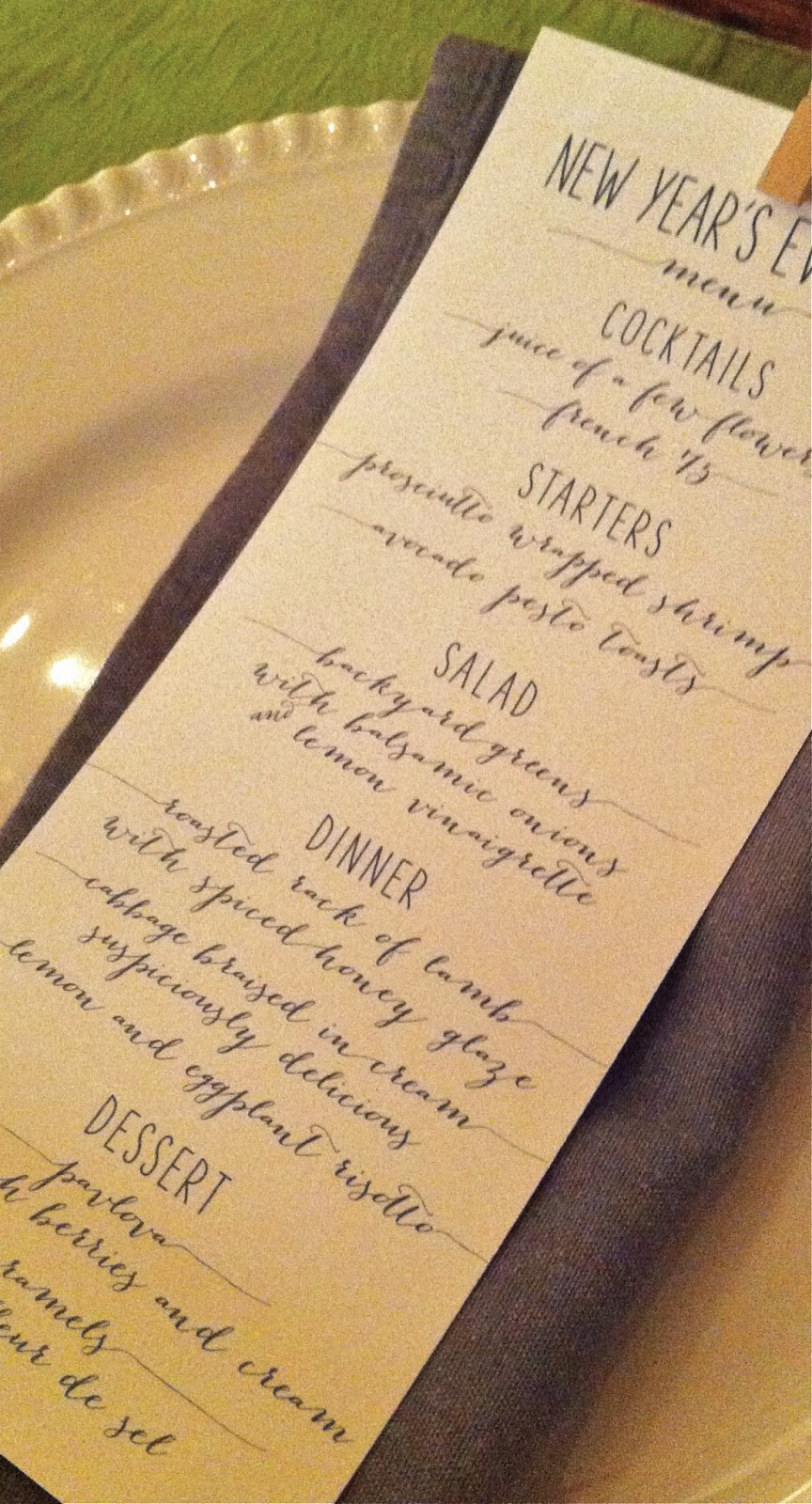

Caroline made the most stylish menus

Prosciutto-wrapped Shrimp with barbeque sauce
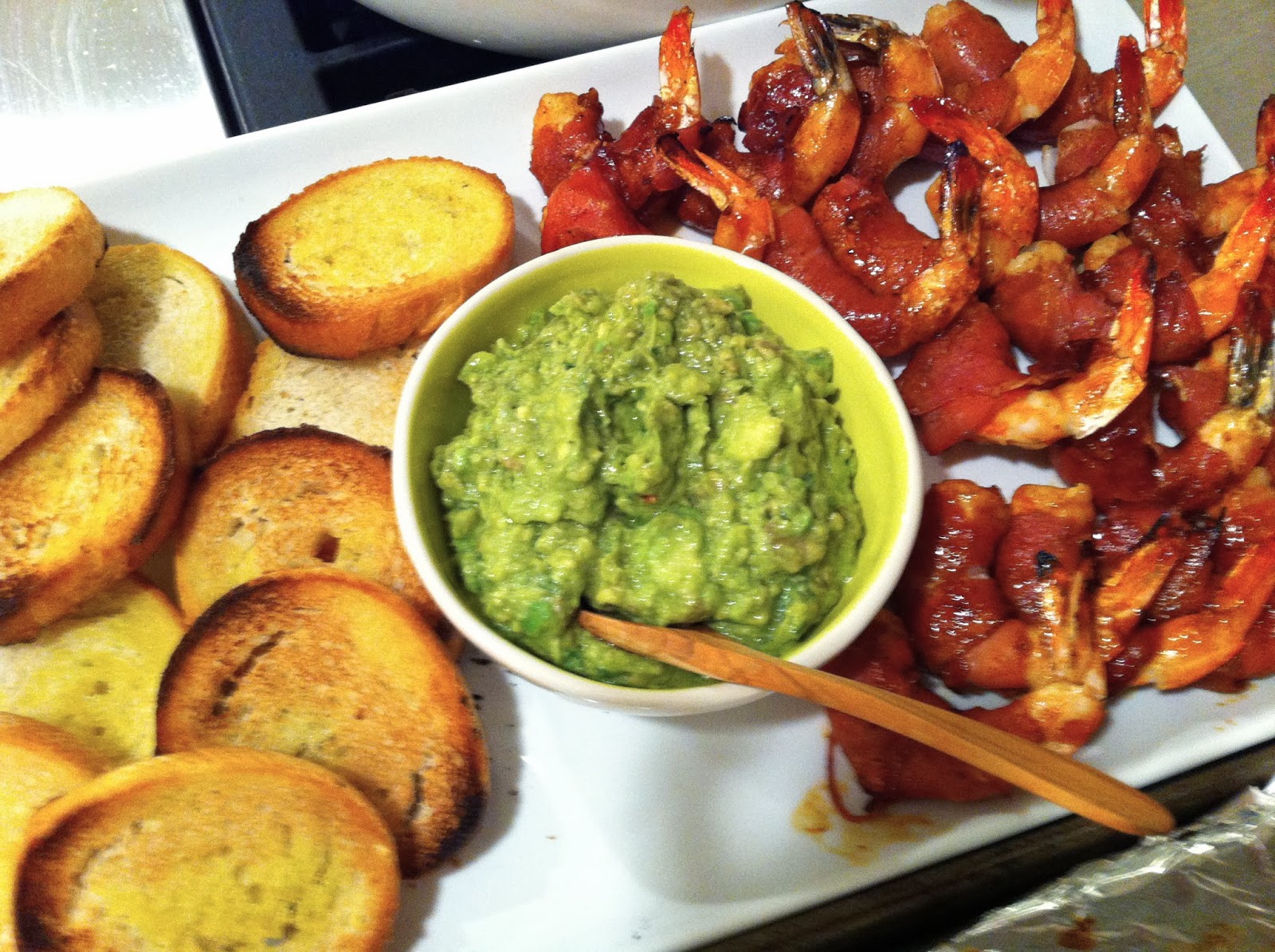


the shrimp and Caroline's avocado pesto

20 extra large shrimp, shelled and deveined

10 slices thin prosciutto, halved lengthwise

2 tablespoons barbeque sauce

olive oil, salt, and pepper

flat parsley, chopped

Preheat oven to 400 degrees. After peeling and deveining the shrimp, brush them with olive oil, and sprinkle with salt (just a touch) and pepper. Wrap each shrimp with one piece of prosciutto and arrange on a baking sheet. Brush each shrimp with barbeque sauce on one side. Place in the oven for 5 minutes. Remove, flip the shrimp and brush the opposite side. Return to the oven for another 5 minutes. Remove from oven. Turn oven to broil on high. Place shrimp under broiler for 1 minute or until prosciutto is crisp (watch this step carefully). Remove from oven and sprinkle with chopped parsley before serving.

Lemon and Eggplant Risotto
From Yotam Ottolenghi’s PLENTY
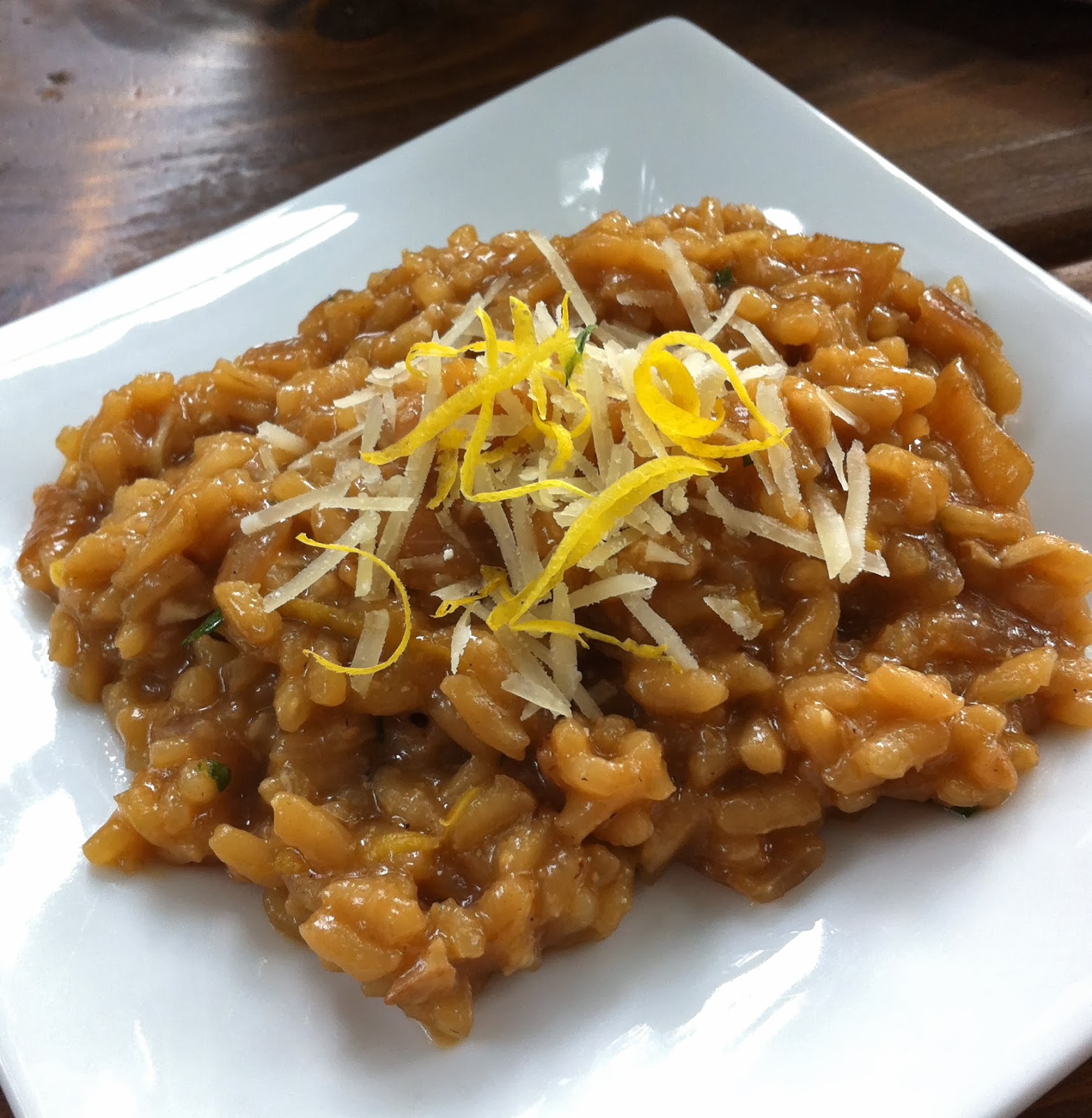

absolutely fabulous

2 medium eggplants

½ cup plus 1 tbsp olive oil

1 medium onion, finely chopped

2 garlic cloves, crushed

7 oz good quality risotto rice (I used Arborio)

½ cup white wine

3 ¼ cups hot vegetable stock (use the highest quality you can find) 

grated zest of 1 lemon

2 tbsp lemon juice

1 ½ tbsp butter

½ cup Parmesan

black pepper

½ cup shredded basil leaves (I julienned about 4 leaves)

Start by burning one of the eggplants: pierce eggplant with a sharp knife in a few places. Put it on a foil-lined tray and place directly under a hot broiler for 1 hour, turning a few times along the way (the eggplant will deflate and the skin should burn and break). Remove eggplant from oven and cut a slit down ithe center in order to scoop out the soft flesh. Chop roughly and set aside.

Cut the other eggplant into ½ inch dice. Heat up 1/3 cup of the olive oil in a frying pan and fry the eggplant dice in batches until golden and crisp. Transfer to a colander and sprinkle with salt.

Put the onion and remaining oil in a heavy pan and fry slowly until soft and translucent. Add the garlic and cook for a further 3 minutes. Turn up the heat and add the rice, stirring to coat it in the oil. Fry for 2-3 minutes. Add the wine (it should hiss) and cook for 2-3 minutes, or until nearly evaporated. Turn the heat down to medium.

Now start adding the hot stock to the rice, a ladleful at a time, waiting until each addition has been fully absorbed before adding the next and stirring all the time. When all the stock has been added, remove the pan from the heat. Add half the lemon zest, the lemon juice, grilled eggplant, butter, most of the Parmesan and ¾ tsp salt. Stir well, then cover and set aside for 5 minutes.

Taste and add more salt if you like, plus the black pepper. To serve, spoon the risotto into shallow bowls and sprinkle with the diced eggplant, the remaining Parmesan, the basil and the rest of the lemon zest.

Myra's Pavlova With Fruit
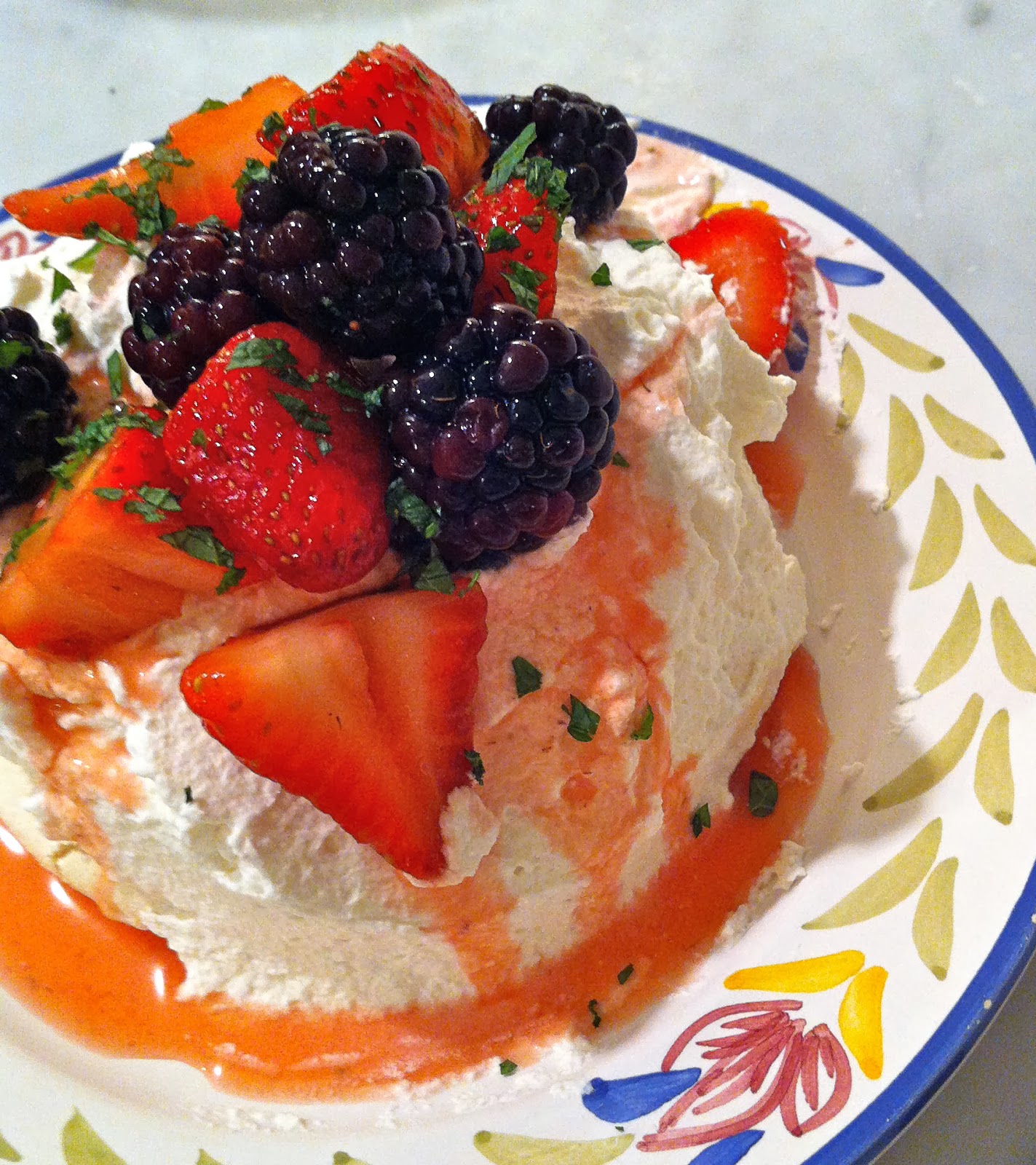


thanks for the recipe Mom!

4 large egg whites

1 cup sugar
½ tsp. pure vanilla extract
1 tsp. white vinegar
½ Tbsp. cornstarch (corn flour)
Topping
1 cup heavy whipping cream
1 ½ teaspoons sugar
½ tsp. pure vanilla extract
Fresh fruit: strawberries, raspberries, blackberries, passion fruit, blueberries, or other fruit of your choice tossed in 1 tablespoon cognac and 1 tablespoon amaretto liqueur
Preheat oven to 250 degrees. Line a baking sheet with parchment paper. You are going to mound the whipped egg whites on the parchment paper and bake. You can draw a 5-inch circle on the paper to make it easier to gage the size. Be sure to turn the paper over so that the pencil lines are not coming in contact with the egg whites.
In the bowl of your electric mixer, with the whisk attachment, beat the egg whites on high speed until they hold soft peaks. Start adding the sugar, 1 tablespoon at a time, and continue to beat, on high speed, until the meringue holds very stiff and shiny peaks. The meringue should feel smooth, not gritty. Beat in the vanilla extract. Sprinkle the vinegar and cornstarch over the top of the meringue and, with gently fold in with a spatula. Spread the meringue on parchment paper in a circle with a well in the center. You will place the whipped cream and fruit in here right before serving.
Bake for 60 to 75 minutes or until the outside is dry and is a very pale cream color. Turn the oven off, leave the door slightly ajar, and let the meringue cool completely in the oven. (The outside of the meringue will feel firm to the touch, if gently pressed, but as it cools you will get a little cracking and you will see that the inside is soft and marshmallow.)
The cooled meringue can be made and stored in a cool dry place, in an airtight container, for a few days.
Just before serving gently place the meringue onto a plate. Whip the cream in a mixer with a whisk attachment and sweeten with sugar and a dash of vanilla. Mound the pavlova with soft whip cream and then arrange fruit on top. Garnish with mint. Serve immediately.

Sunday, December 29, 2013

puppy love


Meet Eleanor, our newest heartbeat. 


When I look down at Ella sleeping in my lap, I pray that she will be healthy, and I ask her to please grow old. I just melt at the sound of her little baby breaths as she cuddles up close, completely unaware of how quickly she has captured us. I could hardly put her down the first few days we had her, letting her nuzzle up in my neck and put her little paws all over my face, and attributing all those standard adorable characteristics one imagines for their animals. We are absolutely in puppy love over here.

Truly, dogs are good for the soul. If you have ever met Quimby (our 5 year old Rhodesian), you will understand how his calm and steady presence could have aided us through those first couple years of medical school and law school (and other heartbreaks along the way). Dogs—and to a more extravagant degree, babies, yikes—demand us to focus our attention outside of ourselves, thereby offering us an opportunity to develop our servant character. This activity, despite its requisite sacrifice of our sleep or cash or food or comfort, also deepens our bond towards that which we serve (I suppose this is why people get so obsessed with their children). I dare say this demand of ourselves even makes us better humans overall, as a well-practiced servitude lends fulfillment and satisfaction, and facilitates a better approach to all our relationships. The diligence we committed to in our promise to raise this puppy well sure helps us take turns rolling out of the bed at 4 am when her little cries require a trip outside to use the restroom, and even affect how we try to help each other during the day when we notice a hint of exhaustion on the other’s face. I think this puppy will be a good thing…


…so, little Ella, please grow old with us. 

Sunday, December 22, 2013

some people just go well around a table


Last week, I gathered around a table with a special bunch of people to celebrate our friend Ali’s 26th birthday. I found these gals over the past few years, some through mutual friends and some through mutual tracks of life. One quality that characterizes this special cohort (and most people I would actually deem my friend) is their table-ability. I mean, these people sit around a table well. They make good cheese plates, start good conversations, and bring good laughs.


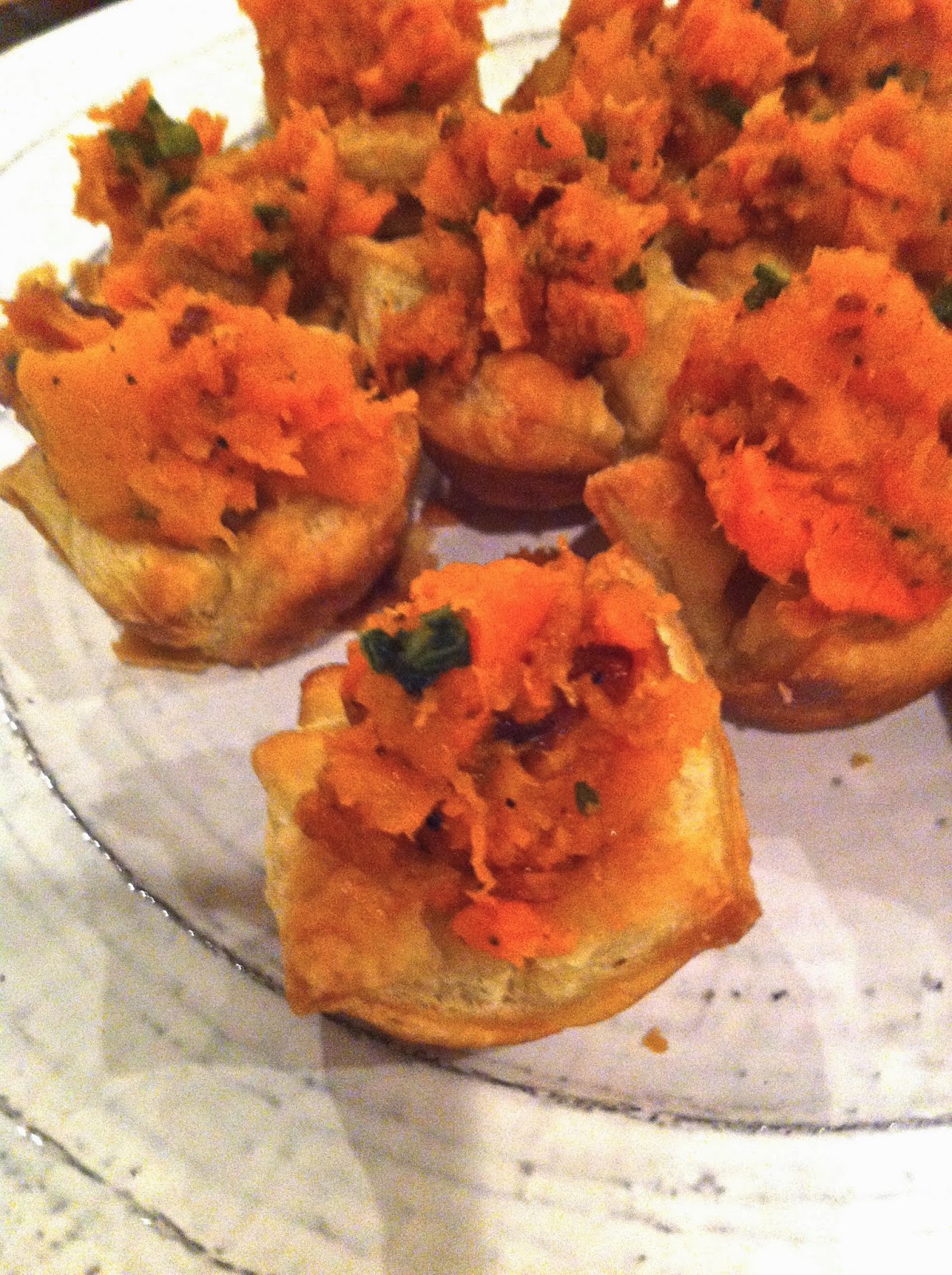
We held the birthday party at my friends’ Mel and Nan’s new house and I offered to bring something warm (as they planned to provide the aforementioned impressive cheese service). I landed on pancetta sage pork tenderloin, because I had just roasted a chicken with this fabulous butter (I included that recipe as well) and a butternut squash/bacon/sage appetizer, because I had a surplus of extra squash from a friend’s farm box. Enjoy!

Pancetta-Sage Pork Tenderloin


2 pork tenderloins

THE butter:
3 garlic cloves, peeled
2 ounces thinly sliced pancetta (Italian bacon), chopped
2 tablespoons finely grated Parmesan cheese
3 tablespoons butter, room temperature
1 tablespoons olive oil
1 teaspoon salt
1 tablespoons minced shallot
2 teaspoons chopped fresh rosemary
2 teaspoons chopped fresh sage
1 teaspoon freshly ground black pepper
To make the butter: Combine garlic and pancetta in a food processor and pulse for a few seconds. Add remaining ingredients and pulse to combine into a coarse paste.
The night before you are ready to prepare this pork tenderloin, prepare THE butter and slather it all over the pork tenderloin. Refrigerate for at least 12 hours.
After chilling the pork slathered in THE bacon for 12 hours, preheat your oven to 375 degrees. Heat a cast iron skillet to high heat. You can flick a few drops of water into the skillet to test its heat: they should pop and sizzle when they hit the skillet if it is heated adequately. Sear each side of the pork tenderloin over high heat (should take about 2 minutes per side). After all sides are seared, place skillet with tenderloin in the oven. Cook for about 20 minutes or until pork registers 155 degrees with a meat thermometer (check it at about 15 minutes, depending on your oven). Remove from oven and tent with foil for 10 minutes before serving 
Pancetta-Sage Roast Chicken


4-5 pound whole young chicken
1 tablespoon salt
6 fresh sprigs of sage
6 fresh sprigs of rosemary
THE butter (recipe above)
oil, salt and pepper
Directions:
The day before you are ready to serve this chicken, set it in a roaster and sprinkle 1 tablespoon salt all over it (add some extra inside the cavity of the chicken). Cover with saran wrap loosely and allow to dry-brine in your fridge for at least 24 hours.
To make the butter: Combine garlic and pancetta in a food processor and pulse for a few seconds. Add remaining ingredients and pulse to combine into a coarse paste.
Preheat oven to 350 degrees. Starting at the neck end, slide your hand between the skin and the meat of the breast and drumsticks to loosen the skin. Spread the sage-pancetta-herb butter between the skin and the meat, trying to cover as much of the meat as possible. Fill the main cavity with the herb sprigs. Tie drumstick legs together loosely to keep them close to the chicken’s body and tuck the wing tips under the bird.
Rub chicken all over with olive oil and a sprinkle of salt and pepper. Roast chicken until a meat thermometer registers 160 degrees, about 1 to 1 ½ hours (very much depends on the size of your chicken and your oven, so begin to check after 1 hour). Remove from oven and tent with foil. Allow to rest about 20 minutes then carve and serve.
MERRY CHRISTMAS PEOPLE!
Didn't that just sneak right up on us?

Monday, December 16, 2013

Pie


“I may not make it into the history books. I can barely concentrate well enough to even read a history book. I know that life doesn't always turn out like you hoped, no matter how hard you try. But I have also figured out that if I put on my apron, get out the flour, sugar and butter and start cooking, I feel a sense of purpose.”
-My mom, Myra

Pear Anise Pie
Adapted slightly from The Four & Twenty Blackbirds Pie Book


Pie Crust (the night before)

2 ½ cups unbleached all purpose flour
1 teaspoon kosher salt
1 tablespoon granulated sugar
2 sticks cold butter, cut into ½ inch pieces
1 cup cold water
¼ cup cider vinegar
1 cup ice

In the bowl of a food processor fitted with the blade, combine flour, salt, and sugar with a few quick pulses. Gradually add in the butter, with a few pulses after each addition, until incorporated (most of the butter pieces will be pea-size, but a few larger pieces are okay, as you do not want to overblend!).

Combine the water, ice, and cider vinegar in a measuring cup and stir to chill. Sprinkle 2 tablespoons of ice water mixture over the flour mixture, and pulse the food processor 2-3 times to combine. Repeat this process (adding in ice water mixture 2 tablespoons at a time with a short pulse afterwards to incorporate the moisture into your dough) until the dough comes together in a ball, with some dry bits remaining (again, do not overblend). Take off the lid of the food processor, remove the blade, and squeeze the dry bits into the dough with your fingers (using just a dash more of the water if necessary) to combine. Shape the dough into 2 equally sized flat discs, wrapping tightly in saran wrap, and refrigerate overnight.

Pie

1 lemon
6-7 medium sized pears (enough for about 5 cups sliced)
½ cup plus 2 tablespoons granulated sugar
1 ½ teaspoons anise seeds
¼ cup packed light brown sugar
2 tablespoons all purpose flour
¼ teaspoon ground allspice
½ teaspoon kosher salt
½ teaspoon cinnamon
4 dashes Peychaud’s bitters

Egg wash (1 egg whisked with 1 teaspoon of water and a pinch of salt)

Have ready and refrigerated one pastry-lined 9 inch pie pan. You can roll out the lattice top once your filling is ready (so keep one saran wrapped disc of crust in the fridge until then).

Juice the lemon into a large bowl, removing any seeds. Prepare the pears using an apple-peeler, or core, peel and thinly slice them yourself (I love my apple peeler…definitely facilitates this process). Dredge the pear slices in the lemon juice. Sprinkle with 2 tablespoons of sugar and toss gently. Set aside to soften slightly and release some of the juices, 20-30 minutes.

Toast the anise seeds in a skillet over medium heat until fragrant, about 5 minutes. In the bowl of a food processor fitted with the blade attachment, combine the remaining ½ cup sugar, toasted anise seeds, brown sugar, flour, allspice, salt, cinnamon, and bitters. Process until the anise seeds are chopped. Shake the sugar mixture through a fine-mesh sieve to remove the anise seed hulls.

Drain any excess juice from the pears and toss them with the sugar mixture. Tightly layer the pears in the prepared pie shell so that there are minimal gaps, mounding them slightly higher in the center.

To make a lattice top pie, roll out your second disc of crust on a floured surface in a circle about 12 inches in diameter and about 1/8th of an inch thick. Using a knife, trim the ragged edges off either side of the circle to square it off. Cut the circle into about 8 long strips of equal width. Take the first strip and lay it just off center across your pie. Lay the second strip perpendicular, again just off center. Lay strip number three parallel to your first strip and strip four parallel on the opposite side (at this point, you will need to weave the remaining strips into a lattice…I fear I would confuse you far more trying to explain this process than letting you just use visual logic to continue the process yourself…I believe in you).

Once you have constructed your lattice, use your thumbs and index fingers to crimp the bottom pie crust and lattice top together at the edges of the pie all the way around. I am beginning to see how difficult it is to teach this method using only my words, and I do so wish each of you could come spend time with me in my kitchen (or time with your mothers in their kitchens) so I could show you and help you learn alongside you. Chill the pie in the refrigerator for 15 minutes to set the pastry.

Meanwhile, position the oven racks in the bottom and center of your oven, and place a foil lined baking sheet on the bottom rack. Preheat the oven to 425 degrees.

When oven is preheated and pastry is chilled, brush pie with egg wash to coat the crust lightly. You can sprinkle the crust with demerara sugar at this point if you’d like. Place the pie on the rimmed baking sheet on the lowest rack of the oven. Bake for 20 minutes, or until the pastry is beginning to brown. Lower the oven temperature to 375 degrees and move the pie to the center oven rack. Continue baking until the pastry is a deep golden brown and the juices are bubbling, about 30-35 minutes longer. Test the pears with a skewer (they should be tender).

Allow the pie to cool completely on a wire rack for about 2-3 hours. Serve at room temperature with a scoop of vanilla ice cream (and heck, maybe some warmed caramel sauce).